

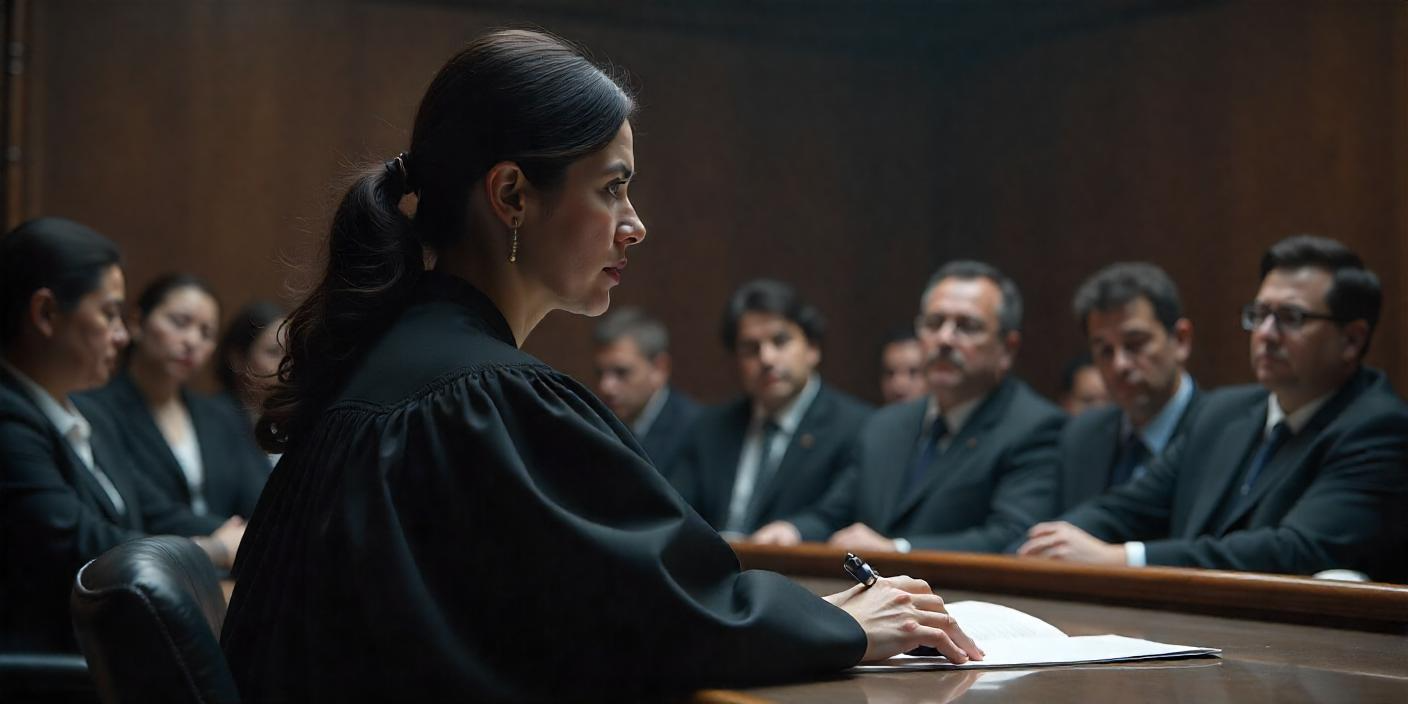
Following the entry into force of Law 1/2025 of 2 January on measures for the efficiency of the Public Justice Service, several legal texts have been modified.
In particular, one of the most important new features that applies to both civil and commercial proceedings is the obligation to resort to an Appropriate Means of Dispute Resolution (ADR) prior to the filing of the lawsuit, with the consequence of inadmissibility in the event of non-compliance. However, there are some cases in which it is not necessary to comply with this prerequisite, such as the initiation of proceedings for the civil judicial protection of fundamental rights, the application for enforcement or for precautionary measures, among others. Also excluded from the application of this measure are labour, criminal and bankruptcy matters.
The request of either party addressed to the other party to initiate a negotiation procedure by any of the appropriate means of dispute settlement, provided that the subject matter of the negotiation is adequately defined, shall interrupt the statute of limitations or suspend the expiration of actions from the date on which the attempt to communicate such request is recorded.
The aforementioned Organic Law has led to several amendments to Law 1/2000, of 7 January, on Civil Proceedings, of which the following should be highlighted:
- At any time during the proceedings, the Legal Secretary or the judge may raise the possibility of referring the dispute to mediation or another appropriate means of dispute resolution, but such referral requires the agreement of the parties.
- The procurator is responsible for the performance of procedural acts of communication and the performance of tasks of assistance and cooperation with the courts.
- Where the intervention of a lawyer and a barrister is not mandatory, the fees and expenses incurred by the lawyer and the barrister shall be excluded from any order for costs of the opposing party, unless the Court finds that they are frivolous.
- When, after having made a previous out-of-court complaint, the consumer chooses to use these professionals to file a claim, the costs assessment does include the solicitor's bill and the lawyer's fees, in the latter case without the limit provided for in Article 394.3 LEC.
- At a hearing, hearing or appearance before the Court or the LAJ, the Court or LAJ may give oral decisions that are not a judgment, indicating whether they are final or not, and if so, stating any appeals that may be lodged.
- In oral proceedings, judgments may be given orally, except in certain cases.
- The requesting party shall be exempted from the costs, unless it is found that the public service of justice has been abused, in order to initiate prior negotiations with a view to avoiding court proceedings, provided that the requested party has refused to take part in such negotiations.
- Unless there are exceptional circumstances, the defendant shall be ordered to pay the costs of the proceedings if he has failed to take recourse to an appropriate means of dispute settlement, where this is legally required or has been agreed in the course of the proceedings, and subsequently accepts the claim.
Likewise, in labour matters, the following amendments to Law 36/2011, of 10 October, Regulating Social Jurisdiction, should be noted:
- The judge may pronounce the judgment orally at the end of the trial, subject to certain conditions. This is without prejudice to the subsequent drafting by the judge or magistrate of the heading, the proven facts and the mere reference to the reasoning pronounced orally, which is deemed to be reproduced, and the full judgment, with an express indication of its finality or, where appropriate, of any appeals that may be lodged.
- The effects of the request for prior conciliation are modified, contemplating the interruption of the statute of limitations or suspension of the expiry of actions from the date of said presentation, with the calculation of time periods resuming the day after the conciliation or mediation has been attempted or fifteen working days have elapsed since its presentation without it having been held.
- Separate and early convocation of conciliation and trial proceedings is allowed.
- Specific provision is made for the possibility of penalising unjustified failure to attend conciliation proceedings.
- There is an extension of the time limit for the parties to provide documentary or expert evidence in advance, from five to ten days before the trial.
And of Royal Legislative Decree 2/2015, of 23 October, approving the Consolidated Text of the Workers' Statute Law, among which it is worth noting:
- Just cause for the worker to request the termination of the employment contract with the right to the compensation established for unfair dismissal includes, among others, non-payment or continuous delays in the payment of wages, with delay being understood to exist when the date established for the payment of wages is exceeded by fifteen days, when there is just cause and the worker is owed, within a period of one year, three full monthly payments of wages, even if not consecutive, or when there is a delay in the payment of wages for six months, even if not consecutive.
- It reintroduces the nullity of dismissal of workers who have requested or are taking leave to care for family members, or the adjustment of working hours provided for in Article 34.8 of the aforementioned law.
Finally, it is worth highlighting Final Provision 17, which amends article 365.3 of Royal Legislative Decree 1/2010, of 2 July, approving the revised text of the Capital Companies Act, extending to two months the deadline for convening the general meeting from when the effects of the communication of the existence of negotiations with creditors to reach a restructuring plan cease to be in force; and Final Provision 28, which contains minor amendments affecting Royal Legislative Decree 1/2020, of 5 May, approving the revised text of the Insolvency Act.
